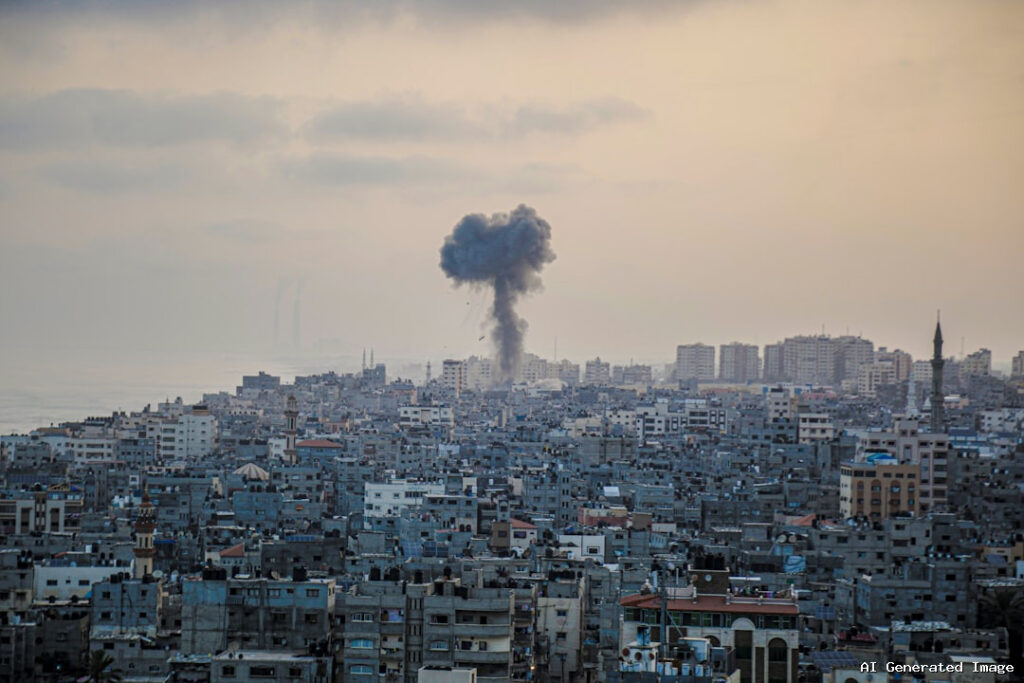
Fragile Calm: Hamas Consolidates Power Amid Ceasefire with Israel
The recent ceasefire between Hamas and Israel, marking the end of a two-year-long conflict, has sparked a mix of relief and concern among regional observers. While the agreement has brought a temporary respite from the violence, it has also allowed Hamas to solidify its hold on power in the Gaza Strip.
A Return to Normalcy? The Hamas Power Play
The Israeli official’s candid remark that “it’s still standing” hints at the enduring presence of Hamas, a militant Islamist organization that has been a thorn in the side of Israel for decades. The group’s resurgence is a testament to its ability to adapt and regroup in the face of adversity. With the ceasefire in place, Hamas has been able to reassert its influence over the Gaza Strip, a territory of approximately 2 million Palestinians.
Historical Context: Hamas’s Rise to Prominence
Hamas’s rise to prominence began in the late 1980s, when it emerged as a splinter faction of the Palestinian Muslim Brotherhood. The group’s founding ideology was rooted in the principles of Islamism and Palestinian nationalism, which emphasized the need for resistance against Israeli occupation. Hamas’s military wing, the Izz ad-Din al-Qassam Brigades, has been responsible for numerous attacks on Israeli civilians and military targets.
A Complex Web of Regional Politics
The Hamas-Israel ceasefire is also a reflection of the complex web of regional politics at play. The Palestinian Authority, led by Mahmoud Abbas, has long been a rival of Hamas, and the recent developments have only served to further exacerbate tensions between the two groups. The Arab states, particularly Egypt and Qatar, have also played a significant role in facilitating the ceasefire, with both countries having significant interests in the stability of the region.
Implications and Future Prospects
The implications of the ceasefire are far-reaching, with significant consequences for regional stability and global security. While the temporary calm may provide a much-needed respite from the violence, it also raises concerns about the long-term prospects for a lasting peace agreement between Israel and Hamas. The international community, including the United States, the European Union, and the United Nations, will closely monitor the situation, seeking to promote a negotiated solution that addresses the core issues driving the conflict.
In conclusion, the Hamas-Israel ceasefire marks a significant turning point in the ongoing conflict, but its long-term implications are far from clear. As the region navigates this complex landscape, it is essential to understand the historical context and regional dynamics that have shaped the current situation. Only by acknowledging these complexities can the international community work towards a lasting resolution that promotes peace, stability, and security for all parties involved.