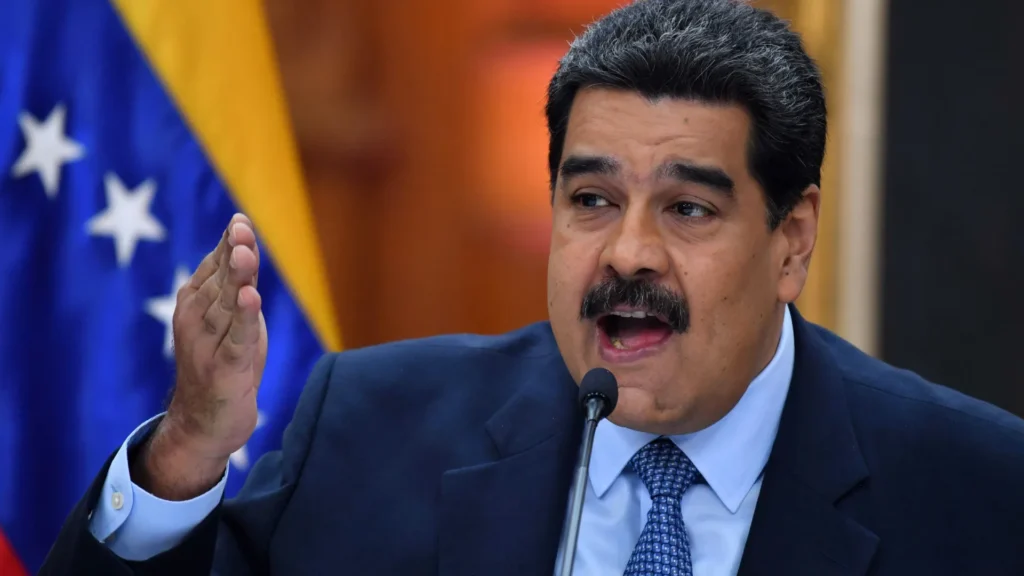
Venezuela’s Impasse: Maduro’s Refusal of Refuge and Brazil’s Regional Concerns
In the midst of escalating tensions in South America, a top Venezuelan official has revealed that the country’s authoritarian leader, Nicolás Maduro, has shown no interest in seeking asylum or mediation to resolve the ongoing humanitarian crisis. This development has sparked concerns in Brazil, which fears that a military intervention in neighboring Venezuela could set a precedent for similar actions in Mexico and Colombia.
Maduro’s Rejection of External Intervention
According to sources close to the Venezuelan government, Maduro has consistently rejected offers of asylum and mediation from international organizations and foreign governments. This stance is seen as a testament to his unwavering commitment to maintaining control over the country, despite the dire economic and humanitarian situation. The Venezuelan economy has been in shambles for years, with widespread shortages of food, medicine, and other essential goods. The country’s collapse has led to a massive exodus of refugees, with millions fleeing to neighboring countries in search of safety and security.
Brazil’s Regional Concerns
Brazil, which shares a long border with Venezuela, is particularly worried about the potential consequences of a military intervention in the country. Brazil’s Foreign Ministry has expressed concerns that a military intervention in Venezuela could create a precedent for similar actions in Mexico and Colombia, both of which have their own unique security challenges. Mexico is grappling with a surge in violence related to organized crime, while Colombia is dealing with the aftermath of a peace agreement with the FARC guerrilla group. A military intervention in Venezuela could potentially destabilize these countries and create a regional security crisis.
Historical Context and Implications
The current situation in Venezuela is not an isolated incident, but rather the culmination of a long history of authoritarian rule and economic mismanagement. The country’s oil-based economy has been plagued by corruption, mismanagement, and over-reliance on a single industry. This has led to a catastrophic collapse of the country’s economy, infrastructure, and social services. The international community has been slow to respond to the crisis, with some countries providing humanitarian aid while others have called for greater diplomatic engagement.
Future Implications
The situation in Venezuela has significant implications for regional and global stability. A military intervention in the country could lead to a destabilization of the region, potentially creating a power vacuum that could be exploited by extremist groups. The crisis in Venezuela also highlights the need for greater international cooperation and diplomatic engagement to resolve conflicts peacefully. The international community must work together to find a solution to the crisis in Venezuela, one that prioritizes the human rights and dignity of the Venezuelan people.
In conclusion, the refusal of Maduro to seek asylum or mediation has raised concerns in Brazil and beyond. The situation in Venezuela is a complex and multifaceted crisis that requires a nuanced and informed response. As the situation continues to unfold, it is essential that the international community remains vigilant and committed to finding a peaceful and sustainable solution to the crisis in Venezuela.