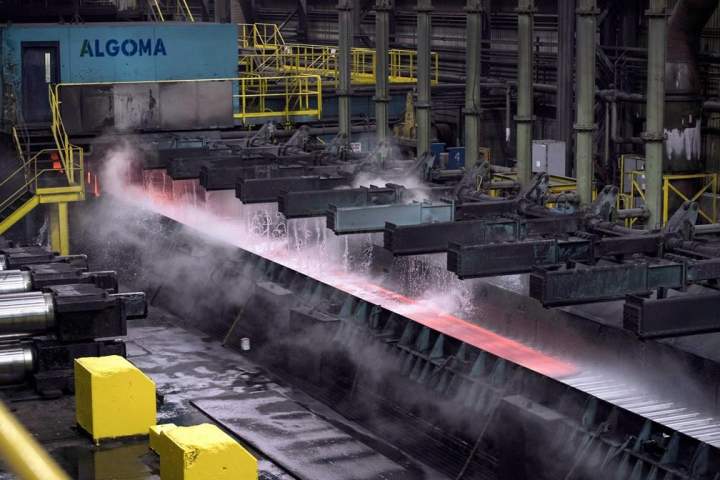
Navigating Trade Tensions: Algoma Steel’s Shift Away from the US Market
In the wake of the 2018 US-China trade war, Canadian steel producers faced unprecedented challenges, with Algoma Steel being one of the hardest hit. The company, a major steel manufacturer in Sault Ste. Marie, Ontario, has been working to diversify its customer base and reduce its dependence on the US market, which had long been its primary customer. This shift is largely a response to the tariffs imposed by the Trump administration, which significantly impacted Algoma Steel’s export business.
The Impact of US Tariffs on Canadian Steel
In 2018, the US government imposed tariffs on Canadian steel, citing national security concerns. The tariffs, which were part of a broader trade dispute between the US and China, had a devastating impact on the Canadian steel industry. Algoma Steel, in particular, saw its exports to the US decline sharply, resulting in significant financial losses. The company’s management attributed the decline to the “unprecedented tariffs” imposed by the Trump administration, which made it increasingly difficult for them to compete in the US market.
Diversification Efforts
In response to the challenges posed by the US tariffs, Algoma Steel has been working to diversify its customer base and expand its export markets. The company has been actively pursuing new business opportunities in countries such as China, India, and Southeast Asia. This shift is part of a broader trend in the Canadian steel industry, as companies seek to reduce their dependence on the US market and capitalize on growing demand for steel in emerging markets.
Historical Context: The Evolution of US-Canada Trade Relations
The current trade tensions between the US and Canada are part of a longer history of trade disputes between the two countries. In the 1980s, the US imposed tariffs on Canadian steel, leading to a significant decline in Canadian steel exports. However, the 1994 North American Free Trade Agreement (NAFTA) helped to reduce trade barriers and increase trade between the US and Canada. The current tariffs imposed by the Trump administration have reversed this trend, highlighting the complexities and challenges of trade relations between the two countries.
Future Implications
The shift away from the US market by Algoma Steel and other Canadian steel producers has significant implications for the Canadian economy. While the company’s diversification efforts are a positive step, the long-term effects of the US tariffs on the Canadian steel industry remain uncertain. As the global steel market continues to evolve, Canadian steel producers will need to adapt to changing trade dynamics and capitalize on new business opportunities.
Conclusion
The shift away from the US market by Algoma Steel is a significant development in the Canadian steel industry. While the company’s diversification efforts are a positive step, the long-term effects of the US tariffs on the industry remain uncertain. As the global steel market continues to evolve, Canadian steel producers will need to adapt to changing trade dynamics and capitalize on new business opportunities.