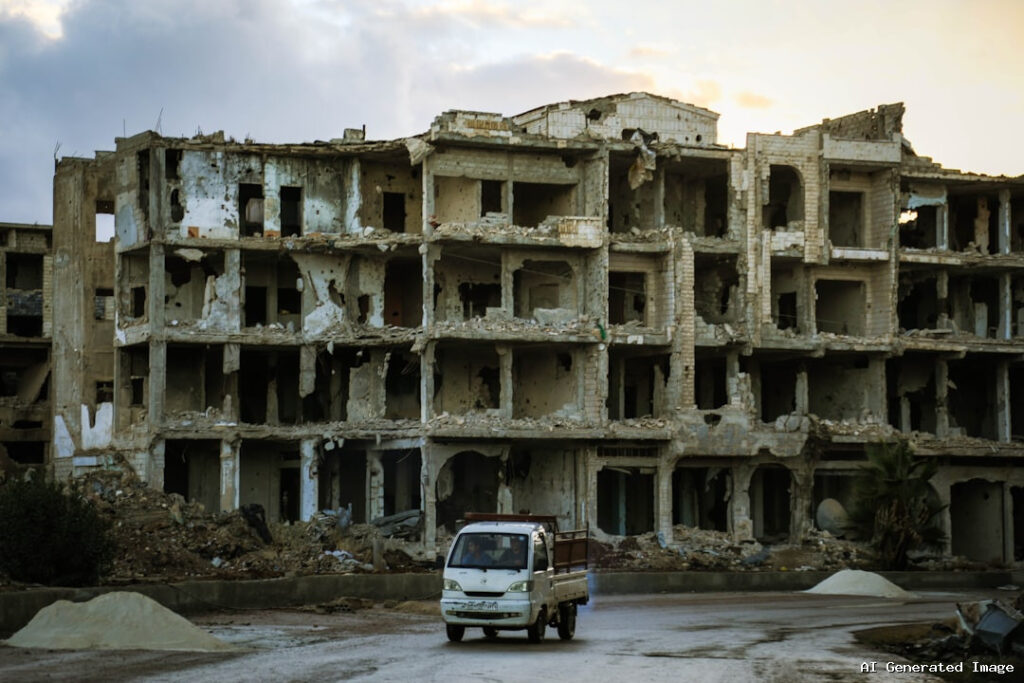
Middle East Tensions: Government Response to Sectarian Violence in Homs
In the midst of escalating sectarian violence in Syria, the government has taken swift action to prevent retaliatory attacks in the central city of Homs, where minority groups have borne the brunt of the conflict. This swift response is a testament to the government’s efforts to manage the crisis, but it also raises questions about the effectiveness of such measures in addressing the root causes of the violence.
A City on the Brink: Homs’ History of Sectarian Tensions
Homs, a city with a rich history dating back to the Roman Empire, has long been a hub of sectarian tensions. The city’s diverse population, comprising Sunni Muslims, Shia Muslims, Christians, and Alawites, has often been a source of friction. The Syrian Civil War, which began in 2011, has exacerbated these tensions, with minority groups facing increasing persecution and violence at the hands of extremist groups.
The Government’s Response: A Balancing Act
The government’s decision to intervene in Homs is a delicate balancing act. On one hand, it aims to prevent further bloodshed and maintain stability in the region. On the other hand, it risks being perceived as favoring one sect over another, potentially exacerbating existing tensions. By deploying security forces to the city, the government has sent a clear message that it will not tolerate violence against minority groups. However, this move also raises concerns about the government’s ability to effectively address the underlying causes of the violence, including the presence of extremist groups and the lack of economic opportunities.
A History of Intervention: Lessons from the Past
The government’s response to sectarian violence in Homs is not without precedent. In 2012, the government launched a military campaign to retake the city of Homs from rebel forces, which had been occupying the city for several months. While the government ultimately succeeded in recapturing the city, the operation was marked by widespread human rights abuses and civilian casualties. This experience highlights the risks of military intervention in sectarian conflicts, particularly when the government’s own forces are implicated in human rights abuses.
A Way Forward: Addressing the Root Causes of Sectarian Violence
While the government’s swift response to sectarian violence in Homs may have prevented further bloodshed in the short term, it is ultimately a Band-Aid solution. To address the root causes of sectarian violence, the government must take a more comprehensive approach, including:
* Addressing the economic grievances of minority groups, which have long felt marginalized and excluded from power and resources.
* Implementing policies to promote sectarian reconciliation and coexistence.
* Strengthening the rule of law and ensuring that those responsible for human rights abuses are held accountable.
Conclusion: A Complex and Delicate Situation
The government’s response to sectarian violence in Homs is a complex and delicate situation, requiring a nuanced and multi-faceted approach. While the government’s swift response may have prevented further bloodshed, it is ultimately a short-term solution that does not address the underlying causes of the violence. To truly address sectarian tensions in Homs, the government must take a more comprehensive approach, one that prioritizes economic development, sectarian reconciliation, and the rule of law.
**Keywords:** sectarian violence, Homs, Syria, government response, minority groups, extremist groups, economic grievances, human rights abuses, rule of law.